When Do You Start Showing in Pregnancy? First and Later Pregnancies
There is no set week. The NHS says a small bump may show around week 13; a first pregnancy might not show until at least week 12, later ones may show sooner.
Not yet medically reviewed. This article sums up published guidance from the sources at the end. It is not medical advice: follow your own midwife or doctor.
On this page
- When do you start showing in pregnancy?
- Do you show sooner in a second pregnancy?
- Is it a bump or bloating in early pregnancy?
- Why do some people show earlier or later than others?
- What changes as your bump grows?
- How does your doctor or midwife check the size of your bump?
- When should you call your doctor or midwife?

When do you start showing in pregnancy?
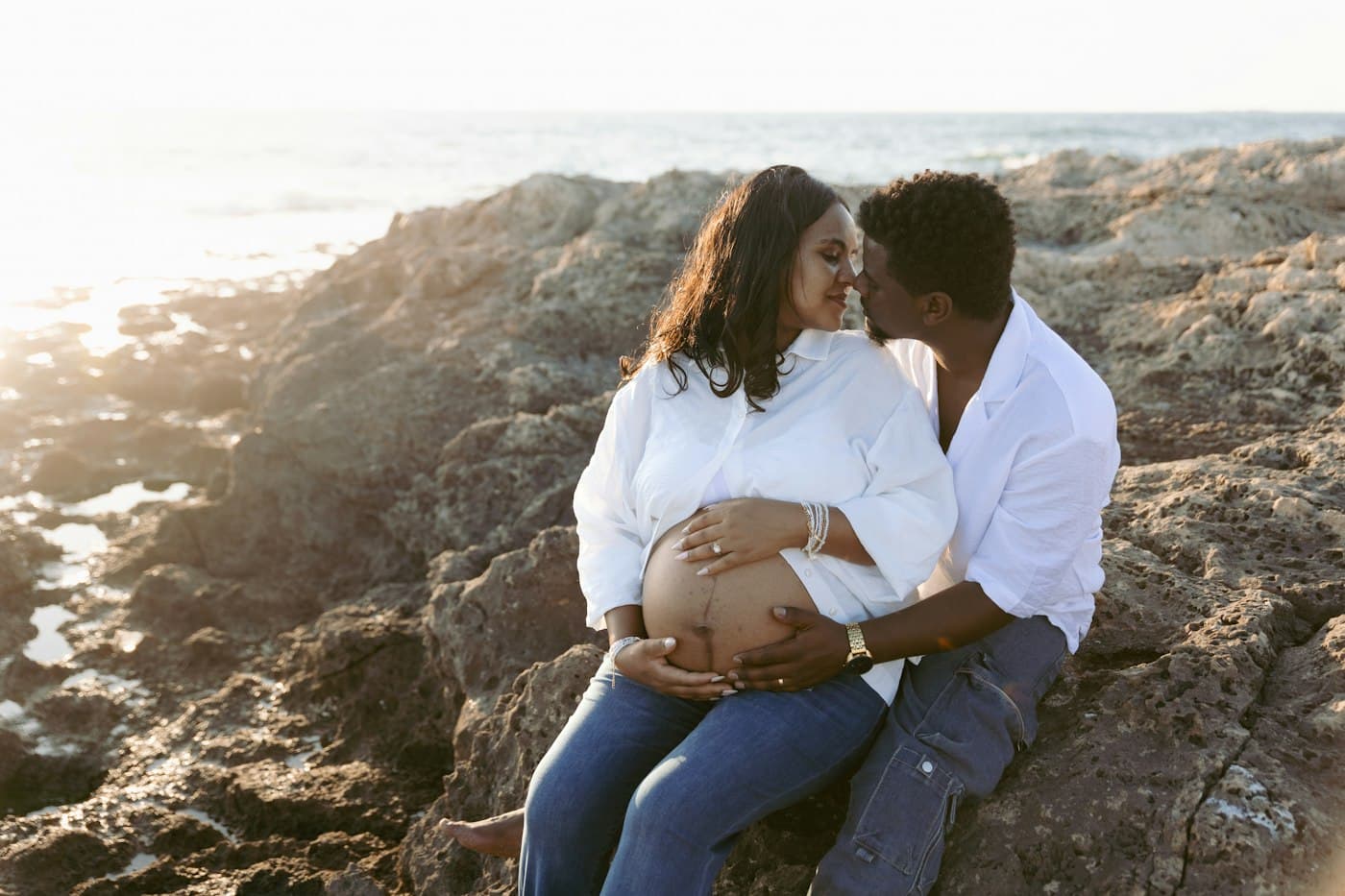
There is no set week, but the NHS week-by-week guide says a small bump may become visible around week 13, the start of the second trimester in its count, as the uterus grows upwards and outwards. Around week 17, it says, your waist starts to disappear as the uterus moves up and out of the pelvis, which makes you look more obviously pregnant.
ACOG (the American College of Obstetricians and Gynecologists) says the uterus fits inside the pelvis until week 12, and lists the abdomen beginning to expand among the changes of the second trimester.
In a first pregnancy, the NHS says you might not start showing until at least week 12. Dr. Tammy Parker, an ob-gyn speaking on Cleveland Clinic's Ob/Gyn Time podcast, said a first pregnancy may not show "for a very long time into their week twenties", and that when the belly starts to show differs from person to person, depending on body type.
| Week | What is happening | Source |
|---|---|---|
| Up to 12 | The uterus is inside the pelvis; you may feel bloated | ACOG |
| About 12 | The top of the uterus is almost level with the pubic bone | Cleveland Clinic |
| 13 | A small bump may be visible | NHS |
| 17 | Your waist starts to disappear | NHS |
| 20 | The top of the uterus reaches the belly button | Cleveland Clinic |
| 36 | The top of the uterus is under the rib cage | ACOG |
Do you show sooner in a second pregnancy?
You may show sooner in a second or later pregnancy. The NHS gives the reason: the muscles of your uterus and belly may have been stretched by your last pregnancy.
Dr. Parker, speaking on Cleveland Clinic's podcast, said that in a second, third or fourth pregnancy the bump may show as early as 12, 13 or 14 weeks, and that many people are surprised by how much earlier it shows the second time.
Is it a bump or bloating in early pregnancy?
In the first trimester, bloating can make your belly feel fuller before there is a bump to show. ACOG says the uterus fits inside the pelvis until week 12, and it lists feeling bloated and having excess gas among first-trimester changes. The NHS 4-week guide says you probably don't look pregnant yet at that stage.
By week 10, the NHS says you may be struggling to do up your jeans. At that point the uterus is around the size of a large orange and the baby is about the size of an apricot. The NHS puts the bloating, burping and wind down to hormones: progesterone relaxes the muscles of the womb so it can expand, and it loosens the muscles of the digestive tract too.
The NHS suggestions for bloating and burping:
- Eat 6 small meals a day and avoid eating late at night.
- Eat slowly and sip fluids.
- Try a short walk after meals.
- Notice whether coffee or rich, spicy or fatty foods set it off; some people find they do.
Why do some people show earlier or later than others?
The NHS says many factors decide how big your bump gets, including your hormones, your weight before pregnancy, how many babies you have already had, and the strength of your muscles.
Your bump is measured from about 20 weeks. Cleveland Clinic lists reasons it can measure larger than expected for the week, including carrying twins or triplets, uterine fibroids, obesity and a due date that is wrong. Its reasons for measuring smaller include being petite or having strong abdominal muscles, and also a baby that is not growing as expected (fetal growth restriction).
The NHS 12-week guide says most pregnancy weight gain usually comes after week 20. How much weight to gain has the ranges by BMI and trimester.
What changes as your bump grows?
Once the uterus rises out of the pelvis, the bump grows upward. ACOG says that by the end of the second trimester the top of the uterus is near your rib cage, and by week 36 it is under the rib cage.
ACOG's list of second-trimester changes also includes skin on the abdomen that stretches and may feel tight and itchy, possible stretch marks, and an ache on one side or the other as the ligaments that support the uterus stretch. Round ligament pain has its own article. In the third trimester, ACOG says, your navel may stick out.
The NHS 13-week guide adds that if you have been needing to pee more often, that should stop as the womb moves away from your bladder.
How does your doctor or midwife check the size of your bump?
Your doctor or midwife measures your fundal height, the distance from your pubic bone to the top of your uterus, at each prenatal visit from about 20 weeks, Cleveland Clinic says. After about 20 weeks, the measurement in centimeters should be close to the number of weeks you are pregnant, give or take 2 cm, so at 24 weeks it would be around 24 cm.
This matching only works from about 20 to 36 weeks, according to Cleveland Clinic. Before 20 weeks the top of the uterus is not high enough, and after 36 weeks the measurement can go down as the baby drops into the pelvis. Cleveland Clinic also says fundal height is not used to set your due date.
A measurement that is off by a couple of weeks or centimeters usually isn't a reason to worry, Cleveland Clinic says; if your provider is concerned, the usual next step is an ultrasound or other tests.
When should you call your doctor or midwife?
Call your doctor or midwife about bleeding, aches you can't manage, or any worry about your symptoms or the size of your bump:
- Aches and pains around your bump that you can't manage. The NHS says you may get a few aches and pains as your bump gets bigger, and to talk to your doctor or midwife if they are not manageable.
- Any symptom at 10 weeks or so that worries you. The NHS 10-week guide says to talk to your midwife or doctor if any symptoms are worrying you, and to see your doctor if you get bleeding.
- Worry that your bump is too big or too small. Cleveland Clinic advises talking to your provider about any concerns about your fundal height.
Sources
- ACOGChanges During Pregnancy
- NHS4 weeks pregnant guide
- NHS10 weeks pregnant guide
- NHS12 weeks pregnant guide
- NHS13 weeks pregnant guide
- NHS17 weeks pregnant guide
- Cleveland ClinicFundal Height: Measurement, What It Means & Accuracy
- Cleveland Clinic (Ob/Gyn Time podcast)Second and Third Trimester Concerns
Last checked .
Written by the MyPregnancy editorial team from the sources above.