Round Ligament Pain: What It Feels Like, Where It Hurts and What Helps
Round ligament pain is a brief sharp, stabbing or pulling pain low in the belly or groin, usually in the second trimester. What eases it, and when to call.
Not yet medically reviewed. This article sums up published guidance from the sources at the end. It is not medical advice: follow your own midwife or doctor.
On this page
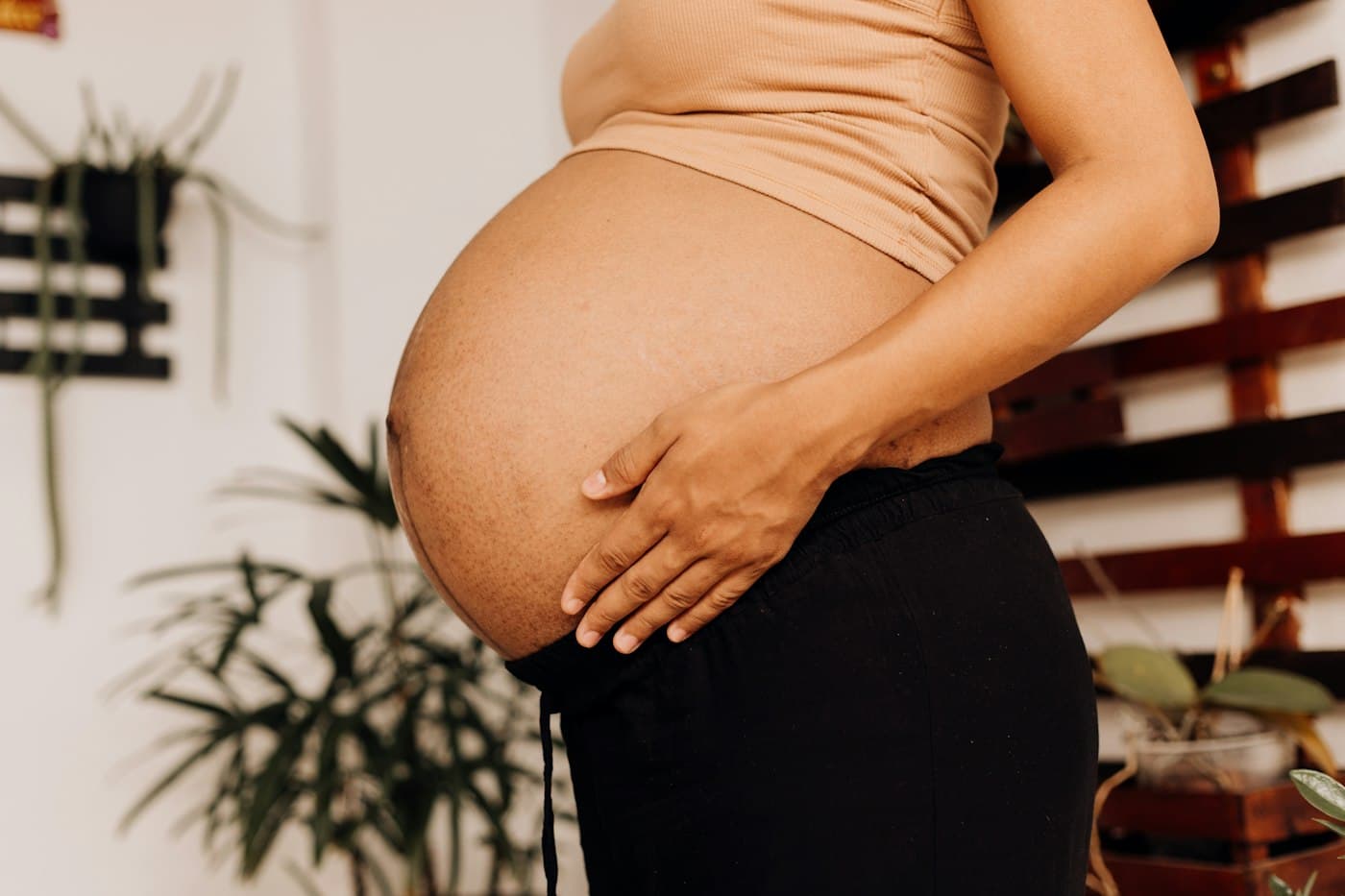
What does round ligament pain feel like?
Round ligament pain is a short, sharp, stabbing or pulling pain, or an ache or cramp, low in the belly or groin, usually set off by a sudden movement. Cleveland Clinic says people describe it as aches, cramps, spasms, or a sharp, stabbing or pulling sensation, and that each episode typically lasts only a few seconds or minutes. StatPearls, the clinical reference on the NIH's NCBI Bookshelf, says the pain may be sharp and cause pulling sensations.
Cleveland Clinic describes the round ligaments as two rope-like bands, one on each side of the uterus, about 4 to 5 inches (10 to 12 cm) long, that connect the uterus through the groin to the lower abdominal wall. As the uterus grows, they get longer and wider and come under tension. Cleveland Clinic explains that these ligaments contract and loosen slowly, so a sudden movement makes them contract faster than they can. StatPearls says round ligament pain is considered a normal part of pregnancy, usually temporary, and goes away with rest.
| Question | What the guidance says |
|---|---|
| Where is it felt? | Lower pelvis or groin, on one side or both (Cleveland Clinic) |
| When does it start? | Second trimester, about weeks 14 to 27 (Cleveland Clinic); most often 18 to 24 weeks (MedlinePlus) |
| How long does it last? | A few seconds or minutes each time (Cleveland Clinic) |
| What sets it off? | Standing up quickly, rolling over or getting out of bed, sneezing, coughing, laughing, exercise (Cleveland Clinic) |
| What helps? | Rest, moving slowly, warmth, gentle stretches, belly support (Cleveland Clinic, StatPearls, MedlinePlus) |
| When does it stop? | For some by the third trimester, for others after birth (Cleveland Clinic) |
| When to call | Pain lasting a few hours, or pain with bleeding, contractions or fever (Cleveland Clinic) |
Where is round ligament pain felt?
Round ligament pain is felt low in the pelvis or in the groin, on one side or both, according to Cleveland Clinic. The NHS calls it ligament pain, or "growing pains", and says it can feel like a sharp cramp on one side of the lower belly. A 2023 review in Cureus describes a cramp-like pain in the lower abdomen that spreads to the groin.
When does round ligament pain start?
Round ligament pain usually starts in the second trimester: Cleveland Clinic puts it at weeks 14 to 27 and says it can come earlier or later, while MedlinePlus says it most often happens between 18 and 24 weeks. The Cureus review says it affects 10% to 30% of pregnancies, often from the end of the first trimester into the start of the second, and is more common in people who have given birth before.
Cleveland Clinic says it often happens repeatedly through the second trimester, when the uterus starts growing faster. Some people find it eases by the third trimester. For others it lasts until after birth, when hormone levels drop and the uterus returns to its pre-pregnancy size.
How do you relieve round ligament pain?
Rest and slower movements are the main treatment: StatPearls calls rest one of the best remedies, MedlinePlus says to move slowly or change position when you feel the pain, and Cleveland Clinic advises moving slowly when you change position. Other measures these sources suggest:
- A warm compress (StatPearls) or a warm, not hot, bath (Cleveland Clinic).
- Bending and flexing your hips, which StatPearls says may ease the pulling. Cleveland Clinic suggests a daily floor stretch: hands and knees on the floor, head lowered towards the floor, bottom in the air.
- Leaning forward before you sneeze, cough or laugh, or supporting your belly with your hands (Cleveland Clinic).
- A belly band (Cleveland Clinic) or maternity girdle (MedlinePlus) for support.
- Avoiding long periods of standing and heavy lifting (StatPearls, Cleveland Clinic).
- In bed, lying on the side opposite the pain with your legs drawn up and a pillow between your knees, and a second pillow under your belly if that helps (Cleveland Clinic).
Cleveland Clinic lists acetaminophen for severe pain. Check with your doctor, midwife or pharmacist before taking it; Tylenol during pregnancy covers what the FDA and ACOG currently say. Cleveland Clinic also suggests asking your provider whether yoga or other gentle exercise could help.
How can you tell round ligament pain from something else?
Round ligament pain is brief, comes with movement and eases with rest, so pain that lasts or comes with other symptoms needs checking. Cleveland Clinic says to call your provider if round ligament pain doesn't go away after a few hours, and StatPearls recommends immediate follow-up for persistent pain to rule out other causes.
The NHS says belly pain is probably nothing to worry about if it is mild and goes away when you change position, rest, poo or pass wind. Conditions that can feel similar include:
- Preterm labor. ACOG lists mild cramps, pelvic or lower belly pressure, a constant dull low backache, and regular or frequent tightenings, often painless, as signs before 37 weeks. Signs of preterm labor lists the others.
- A urinary tract infection. The NHS says UTIs are common in pregnancy and can cause belly pain, sometimes with pain when you pee.
- Appendicitis. MedlinePlus lists it among the problems that constant, severe belly pain can point to, and the Cureus review calls it the most common non-obstetric surgical condition in pregnancy.
- Placental abruption. The NHS says it usually causes bleeding and pain that can come and go like a contraction or be constant, and to call 999 for an ambulance if the pain or bleeding is severe.
- Ectopic pregnancy, earlier on. The NHS says its symptoms typically appear between 4 and 12 weeks and include belly pain with bleeding and pain in the tip of the shoulder. Cramping in early pregnancy covers that stage.
When should you call your doctor or midwife?
- Vaginal bleeding or spotting (NHS, Cleveland Clinic).
- Regular cramping or tightenings, or pain or pressure in your lower back (NHS, Cleveland Clinic).
- Discharge that is unusual for you, or fluid leaking from your vagina (NHS).
- Pain when you pee, needing to pee suddenly or more often, or pee that looks cloudy, pink, red or brown (NHS).
- Fever or chills, or nausea or vomiting not related to morning sickness (Cleveland Clinic).
- Pain that is severe or doesn't go away after 30 to 60 minutes of rest (NHS).
- Call 911 (999 in the UK) if you are bleeding and have severe belly pain or pain in your shoulder, feel sick, faint or dizzy, or the bleeding soaks a pad soon after you put it on (NHS).
Sources
- Cleveland ClinicRound Ligament Pain
- NCBI Bookshelf (StatPearls)Anatomy, Abdomen and Pelvis: Uterus Round Ligament
- MedlinePlusAches and pains during pregnancy
- NHSStomach pain in pregnancy
- NHSVaginal bleeding in pregnancy
- Cureus (Dhamecha et al., 2023)Acute Abdomen in Pregnancy: A Comprehensive Review of Diagnosis and Management
- ACOGPreterm Labor and Birth
Last checked .
Written by the MyPregnancy editorial team from the sources above.