Preeclampsia Symptoms: When It Starts, After the Birth and Low-Dose Aspirin
Preeclampsia can cause a headache that won't go away, vision changes, upper belly pain and sudden swelling, or no symptoms at all. When it starts, when to call.
Not yet medically reviewed. This article sums up published guidance from the sources at the end. It is not medical advice: follow your own midwife or doctor.
On this page
What are the symptoms of preeclampsia?
The symptoms of preeclampsia include a headache that will not go away, changes in your vision, pain in the upper belly or shoulder and sudden swelling of the face or hands, but ACOG says it can also develop quietly without you being aware of it. The NHS says its early signs, high blood pressure and protein in the urine, are unlikely to be noticed, which is why your blood pressure and urine are checked at prenatal appointments.
ACOG says to call your ob-gyn right away if any of its listed symptoms appear, especially in the second half of pregnancy, and the NHS says any of them can be serious and needs checking immediately. Their lists overlap:
| Symptom | ACOG | NHS |
|---|---|---|
| Headache | A headache that will not go away | A severe headache that does not go away with simple painkillers |
| Vision | Seeing spots or changes in eyesight | Blurred vision or seeing flashing lights |
| Pain | Pain in the upper abdomen or shoulder | Pain below the ribs |
| Swelling | Swelling of the face or hands | Sudden swelling of the face, hands or feet |
| Stomach | Nausea and vomiting in the second half of pregnancy | Vomiting; heartburn not helped by heartburn medicines |
| Breathing | Difficulty breathing | Not listed |
| Weight | Sudden weight gain | Not listed |
| Feeling unwell | Not listed | Feeling very unwell |
The USPSTF says preeclampsia complicates about 4% of pregnancies in the US. ACOG and the NHS both say it can lead to seizures, stroke and HELLP syndrome, a liver and blood disorder that ACOG calls a medical emergency. The NHS adds that in most cases preeclampsia is not severe. For the baby, the NHS says it can mean slower growth and premature birth. For other causes of headaches and what helps, see headaches during pregnancy.
When does preeclampsia happen?
Preeclampsia usually develops after 20 weeks of pregnancy, often in the third trimester, according to ACOG. When it starts before 34 weeks, ACOG calls it early-onset preeclampsia. The NHS says it is most likely from 20 weeks onwards but can happen at any point in pregnancy, and both ACOG and the NHS say it can also start in the days or weeks after the birth.
How is preeclampsia diagnosed and treated?
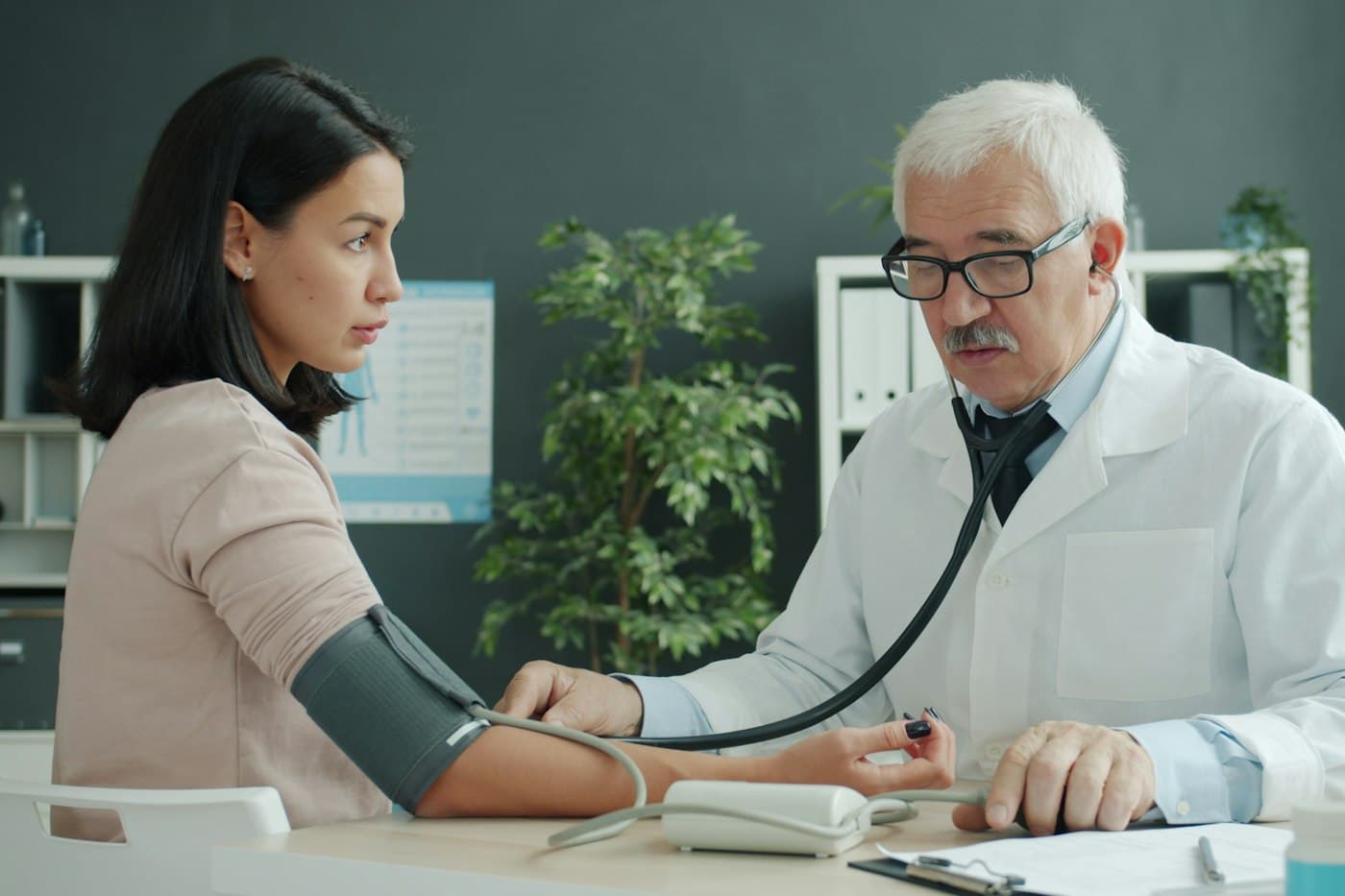
Preeclampsia is found through blood pressure checks and tests of your urine and blood, and it is treated with close monitoring, blood pressure medicine and, when needed, an earlier birth. ACOG says a high blood pressure reading may be the first sign. The reading may be repeated, and you may have a urine test for protein and blood tests of your liver, kidneys and platelets.
ACOG counts blood pressure in pregnancy as high at 140 or more on top, 90 or more on the bottom, or both, and as severe at 160 or more on top or 110 or more on the bottom. Without severe features, ACOG says you may be treated in the hospital or as an outpatient, staying at home with blood pressure checks, a daily kick count and visits once or twice a week. With severe features, you may be treated in the hospital.
The NHS says you will usually be given medicine to lower your blood pressure and may be given medicine to prevent seizures by injection or drip. It says it is often safer for the baby to be born early, sometimes before 37 weeks, by induction or cesarean, and that symptoms usually improve once the baby is born.
Who is at higher risk of preeclampsia?
ACOG's high-risk group for preeclampsia includes people who had it in a past pregnancy, are carrying twins or more, or have chronic high blood pressure, kidney disease, diabetes or an autoimmune condition such as lupus, and anyone with several moderate risk factors.
ACOG's moderate risk factors are a first pregnancy, more than 10 years since your last pregnancy, a BMI over 30, a mother or sister who had preeclampsia, being 35 or older, complications in a past pregnancy such as a baby with low birth weight, IVF, and Black race or lower income, which ACOG links to racism and inequities that raise the risk of illness. The NHS list is similar but uses age 40 or over and a BMI of 35 or more, and names a Black or South Asian ethnic background.
Does low-dose aspirin prevent preeclampsia?
Low-dose aspirin lowers the risk of preeclampsia in people at high risk, according to the USPSTF, and US and UK guidance recommend it for them on a doctor's or midwife's advice. The USPSTF recommends low-dose aspirin after 12 weeks for people at high risk. It found that aspirin also reduced the risk of preterm birth, a baby who is small for gestational age, and perinatal death, and that the trials showed no evidence of harm, with bleeding problems uncommon.
ACOG says low-dose aspirin may reduce the risk of preeclampsia in some women. Your ob-gyn may recommend it if you are at high risk or have two or more moderate risk factors, and ACOG says it may also be considered if you are Black or have a low income, even without other risk factors. The USPSTF notes that ACOG and the Society for Maternal-Fetal Medicine advise starting between 12 and 28 weeks, ideally before 16 weeks, and continuing daily until delivery. The NHS says aspirin is taken every day from week 12 until the baby is born.
ACOG and the NHS both say not to start aspirin on your own. Check with your doctor, midwife or pharmacist before taking any medicine in pregnancy.
Can you get preeclampsia after giving birth?
Preeclampsia can start after the birth, most often within a few days and up to 6 weeks later, according to ACOG, including in women whose blood pressure was normal during pregnancy. ACOG says to call your doctor right away if a home reading shows a top number of 140 or more or a bottom number of 90 or more, or if you have:
- changes in vision, such as blurring, light sensitivity or seeing spots
- a headache that will not go away
- shortness of breath
- swelling of the face or hands
- pain in the shoulder or belly, often on the upper right side
- nausea or vomiting
- sudden weight gain of 2 to 3 pounds (0.9 to 1.4 kg) or more in a week
The NHS says that after you leave hospital you may need blood pressure medicine for a few weeks and regular blood pressure checks. ACOG says preeclampsia raises the risk of kidney disease, heart attack, stroke and high blood pressure later in life, and of preeclampsia in a future pregnancy. For the rest of recovery, see your body after birth.
When should you call your doctor or midwife?
Call your doctor or midwife right away, in pregnancy or in the weeks after the birth, if you have:
- a headache that will not go away or is getting worse
- changes in your vision, such as blurring, seeing spots or flashing lights, or sensitivity to light
- pain below your ribs, in your upper belly or in your shoulder
- sudden swelling of your face, hands or feet
- nausea and vomiting in the second half of pregnancy, or heartburn that heartburn medicine does not help
- trouble breathing or sudden weight gain
- feeling very unwell
- after the birth, a home blood pressure reading with a top number of 140 or more or a bottom number of 90 or more
The CDC lists several of these as urgent warning signs during pregnancy and in the year after delivery, and says to seek medical care immediately if you have one. In the UK, the NHS says to call your maternity unit if you are pregnant, or 111 if you have recently given birth or cannot reach the unit. After the birth, ACOG says that if you cannot reach your ob-gyn, or feel you need immediate care, you should call 911 or go to the hospital.
Sources
- ACOGPreeclampsia and High Blood Pressure During Pregnancy
- ACOG3 Conditions to Watch for After Childbirth
- NHSPre-eclampsia
- USPSTFAspirin Use to Prevent Preeclampsia and Related Morbidity and Mortality: Preventive Medication
- CDCUrgent Maternal Warning Signs and Symptoms
Last checked .
Written by the MyPregnancy editorial team from the sources above.