Your First Prenatal Appointment: When to Book, Tests and What to Ask
Your first prenatal visit covers your health history, a physical exam, blood and urine tests and your due date. When to book it, what to bring and what to ask.
Not yet medically reviewed. This article sums up published guidance from the sources at the end. It is not medical advice: follow your own midwife or doctor.
On this page
- What happens at the first prenatal appointment?
- When should you book your first prenatal appointment?
- What tests are done at the first prenatal visit?
- Will you have an ultrasound at your first appointment?
- What should you bring to your first prenatal appointment?
- What questions should you ask at your first prenatal appointment?
- When should you call your doctor or midwife before your first appointment?
What happens at the first prenatal appointment?
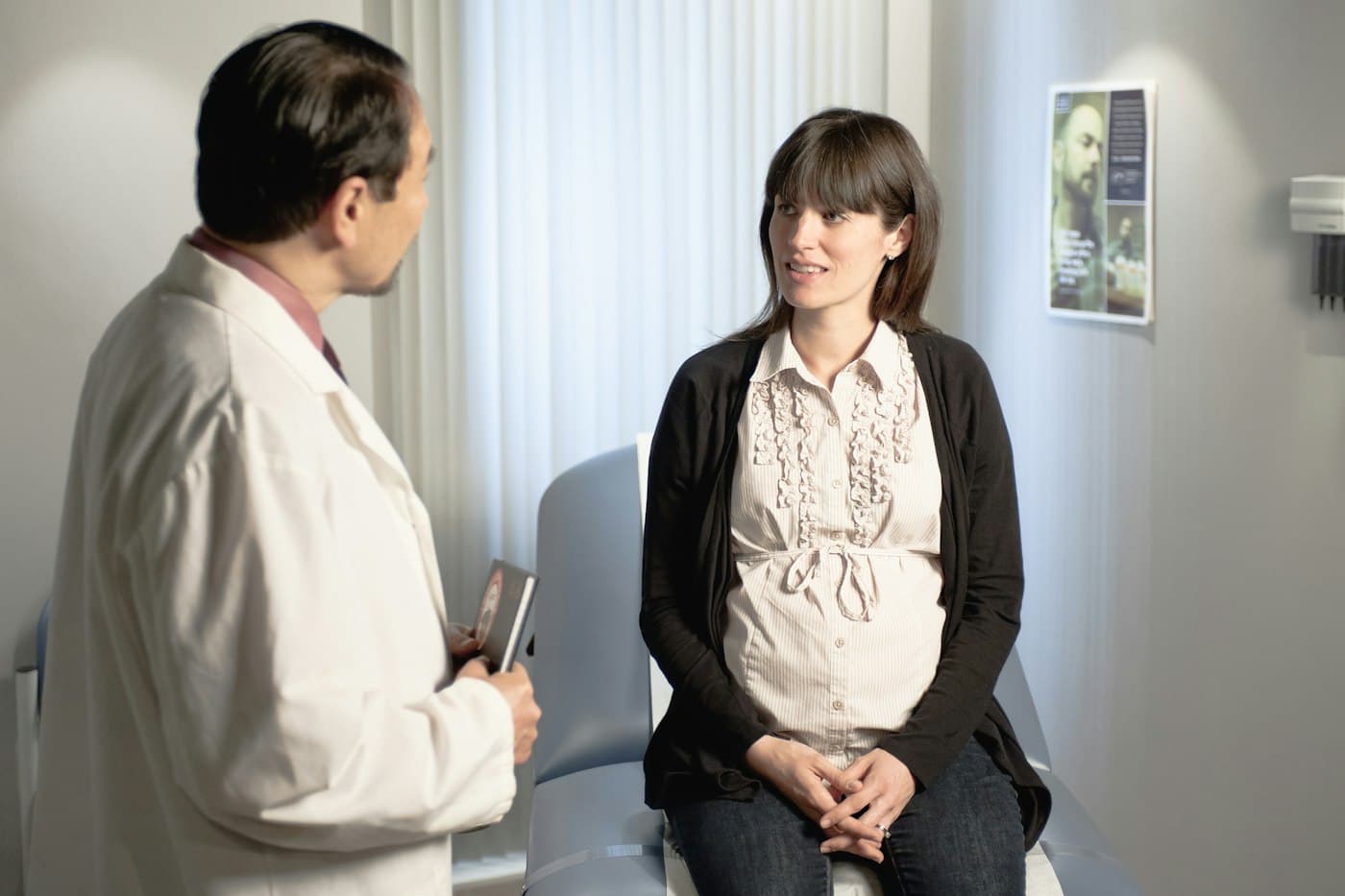
At the first prenatal appointment, your doctor or midwife takes your health history, examines you, orders blood and urine tests and works out your due date. NICHD says the visit usually includes questions about your health, past pregnancies, family and genetic history and lifestyle, a urine test, prenatal blood tests, a complete physical exam including a pelvic exam, and an offer of genetic testing. It will be one of your longest visits, NICHD says, so allow plenty of time.
ACOG says your ob-gyn may also ask about your support network, food and transportation, because all three can affect your health in pregnancy. If you are concerned about confidentiality, ACOG suggests talking about it before you answer any questions.
| Topic | In the US (ACOG, NICHD) | In England (NHS) |
|---|---|---|
| When | First trimester, ideally before 10 weeks after your last period | 8 to 12 weeks; by 10 weeks where possible |
| Who you see | An ob-gyn, family medicine doctor or midwife | Usually a midwife |
| How long | One of your longest visits | Around 1 hour |
| Checks | Physical exam, which may include a pelvic exam; urine test | Blood pressure and a urine test |
| Blood tests | Blood count, blood type and Rh factor, hepatitis B and C, HIV, syphilis, rubella | Blood group; information on screening tests |
| Scan | Depends on how far along you are | Dating scan at 11 to 14 weeks |
When should you book your first prenatal appointment?
Book your first prenatal appointment as soon as you know you are pregnant, for a visit in the first trimester, ideally before 10 weeks. ACOG says before 10 weeks after your last period is ideal, though it can be earlier or later depending on when you find out and how quickly you can find an ob-gyn. NICHD says to schedule the visit as soon as you think you are pregnant and that it will probably take place after your eighth week.
NICHD says most providers won't see you earlier unless you have a medical condition, had problems in a past pregnancy, or have symptoms such as spotting or bleeding, stomach pain, or severe nausea and vomiting.
In England, the NHS says you can refer yourself to maternity services, usually without seeing a GP, and that the first midwife appointment should happen by 10 weeks where possible. If you are already more than 10 weeks pregnant, the NHS says to refer yourself as soon as possible. If you have a long-term health condition or take medicine, it says to see your GP or specialist as well.
What tests are done at the first prenatal visit?
The tests at the first prenatal visit check your blood count, blood type and urine and screen for infections and immunity. ACOG lists these as routine early in pregnancy: a complete blood count, blood type and Rh factor, a urinalysis and a urine culture, plus tests for rubella, hepatitis B and C, HIV and other sexually transmitted infections, and tuberculosis for people at high risk. ACOG says you should be tested for syphilis three times in pregnancy, starting at the first visit, and for chlamydia and gonorrhea if you are under 25 or at increased risk.
ACOG says the urine culture is done because a urinary tract infection sometimes causes no symptoms, and that if you are Rh negative you may be given medicine during pregnancy to stop Rh antibodies forming. If you are not immune to rubella, ACOG says to avoid anyone who has it; the vaccine is not recommended during pregnancy and can be given after the birth.
Genetic screening is offered, and it is your choice. ACOG says screening tests show the chance that the fetus may be at risk for certain common birth defects but cannot tell whether it actually has one, that they carry no risk to the fetus, and that screening and testing are a personal choice. The NHS offers screening for Down's syndrome, Edwards' syndrome and Patau's syndrome at the 11 to 14 week scan. The options are explained in the nuchal translucency scan and the NIPT test.
Will you have an ultrasound at your first appointment?
Whether you have an ultrasound at your first appointment depends on how far along you are, NICHD says. MedlinePlus says you should have an ultrasound in the first trimester to estimate your due date, and that it is usually done through the vagina at this stage.
MedlinePlus also says the heartbeat usually cannot be heard or seen on ultrasound until at least 6 to 7 weeks, so it may not be heard at an early visit. In England, the NHS offers a dating scan at 11 to 14 weeks, which checks when your baby is due, how they are developing and whether you are having more than one baby.
What should you bring to your first prenatal appointment?
Bring the date your last period started and a list of everything you take. ACOG suggests bringing:
- the first day of your last menstrual period, to help set your due date
- a list of all medicines, vitamins and supplements you take
- details of any health conditions, past surgeries and your vaccination records
- information on past pregnancies, including any that ended in miscarriage, stillbirth or abortion
- any past experience of preterm birth, preeclampsia or gestational diabetes
NICHD suggests keeping a running list of questions to bring. MedlinePlus says you will be given prenatal vitamins with iron if you are not already taking them; prenatal vitamins covers what they should contain.
What questions should you ask at your first prenatal appointment?
Ask about your symptoms, your tests and how your care will work. NICHD calls the first visit a great time to ask questions, and MedlinePlus and ACOG suggest these topics:
- Which genetic screening tests are available, and what could the results mean?
- What can I do about morning sickness, and what should I do if I have vaginal bleeding?
- What should I eat, and how much exercise is right?
- What happens at each visit, and how often will I come in?
If you are still choosing a provider, the Office on Women's Health suggests finding out whether you will always see the same provider, who covers when they are away, how they handle after-hours calls, and whether they can deliver your baby at the hospital or birth center you want.
How often you come in varies. ACOG describes "tailored prenatal care", a plan based on your risk of complications that may mix telehealth and in-person visits. The Office on Women's Health describes the usual pattern as monthly visits from weeks 4 to 28, twice a month from 28 to 36, and weekly from 36 weeks to birth. The NHS offers at least 10 appointments in a first pregnancy and at least 7 if you have given birth before.
When should you call your doctor or midwife before your first appointment?
Call before your first appointment if you have bleeding or cramping, a lot of nausea and vomiting, a fever or pain when you pee, or any worry about your pregnancy.
ACOG lists these as signs of an ectopic pregnancy that may have ruptured a fallopian tube. MedlinePlus says to contact your doctor or midwife in the first trimester if you have:
- bleeding or cramping (see spotting during pregnancy)
- a significant amount of nausea and vomiting
- more vaginal discharge than usual, or discharge with an odor
- a fever, chills or pain when passing urine
- any questions or concerns about your health or your pregnancy
The NHS says you can contact maternity services at any time if you are worried about your health or your baby's, without waiting for your next appointment.
Sources
- ACOGPrenatal Care
- ACOGRoutine Tests During Pregnancy
- ACOGEctopic Pregnancy
- NICHDWhat happens during prenatal visits?
- MedlinePlusPrenatal care in your first trimester
- Office on Women's HealthPrenatal care and tests
- NHSYour antenatal care and appointments
- NHSRefer yourself for NHS pregnancy care
Last checked .
Written by the MyPregnancy editorial team from the sources above.